Concordia Neighborhood Association | Portland, Oregon

  • Home
  • Get Involved
    • Upcoming Events
    • Events Calendar
    • CNA Meetings
    • Land Use & Transportation Committee (LUTC)
    • Media Team
    • Concordia Commons
    • Concordia News Submissions
    • Our Association
      • Bylaws
      • Directors & Staff
      • Donate
  • Concordia News
    • Advertise
    • Concordia News Issues
    • Write for Concordia News
  • Community Room
    • Community Room Rental
    • Community Partners Guidelines
    • Community Room Calendar
  • Resources
    • Services & Agencies
    • Schools
  • Contact

Category Archives: Concordia News

Supporting Lost and Found Pets

Posted on March 7, 2024 by Jordana Leeb Posted in Concordia News
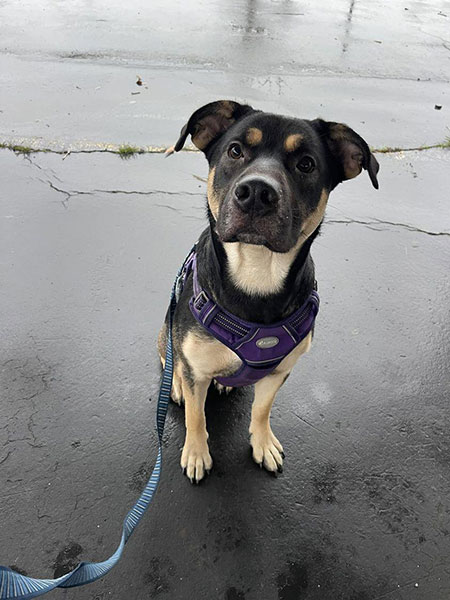
“Anyone missing this pup? Found this morning at Meek school. No collar no tags, safe now and getting checked for a chip.” – December 25th, 2023 Being Neighborly, Concordia NE Portland Buy Nothing Companion Group
Dog found Christmas morning 2023. Named ‘Violet’ by MCAS and adopted in January. Photo from Being Neighborly post.

Posts such as this are frequent on Concordia neighborhood social media groups, when animals (mostly dogs and sometimes cats) are found in parks and neighbor- hoods. These animals pull at our heart strings and elicit a slurry of responses from concerned neighbors.

What steps should be taken when finding a lost animal? Multnomah County Animal Shelter (MCAS) employee Jay LeVitre helps answer this and other questions: if you find a dog without an owner, you have a few options. You can carry a leash and try to capture the dog yourself. If that doesn’t feel safe, you can call Troutdale- based MCAS at (503) 988-7387 and an officer will come to help capture the dog. If you want to care for the captured dog at home (instead of bringing it to MCAS), follow the steps explained on the MCAS website at multcopets.org/found-pet.

If the dog does not have a tag, you can take the dog to a vet to have it scanned for a microchip; a free service that all vets provide. MCAS also recommends filling out a found report on their website and sharing information on local social media groups, such as Next Door, Buy Nothing, Being Neighborly, PawBoost, and Petco Love Lost. If you want to keep the dog you find, there is a 180-day waiting period to allow time to find its owner.

According to Levitre, MCAS takes in 12-16 animals every day. More animals tend to get lost in summer, versus winter months because in summer, people spend more time outside with their animals, leave animals in the yard or have windows open in the house where animals can escape.

Since the decline of the pandemic, shelters have experienced a “10-year high” in numbers of animals both locally and nationally and, Levitre thinks this is due to “a direct correlation between economics and high numbers, particu- larly due to housing instability.”

When an animal comes to MCAS, it is first checked for a license and then goes through a brief intake process to collect information used for a found report. An animal with a license is held for six business days during which every effort is made to contact and find the owner. After six days (or three days without a license), shelter staff evaluate the animal. It is then either readied for adoption, put in foster care, or transferred to another shelter, such as the Oregon Humane Society. Of the 300 or so total animals MCAS currently has in its care (dogs, cats, rabbits and other species), about 150 of them are in foster care.

For dogs and puppies that were found between July 2022-June 2023, 33% were adopted, 45% were returned to their owners, 13% were transferred to other agencies or rescues and 9% were either euthanized or died in care, LeVitre says.

On a recent tour of MCAS, led by long-time volunteer and now employee Bud Garrison, the compact shelter was bustling with activity. Volunteers were carefully folding recently-washed blankets and walking dogs on nearby tree-lined trails, animal care staff were conducting wellness checks with new arrivals, and an MCAS officer was preparing to go on patrol. Bright, colorful dog toys lay neatly stacked in piles and a refrigerator was packed with care- fully prepared Kong toys stuffed with cottage cheese, peanut butter or pureed pumpkin.

“Volunteers are the heart and soul of the MCAS operation and we could not function well without them,“ says LeVitre.

If you are interested in helping dogs in Multnomah County, consider volun- teering at MCAS. More information can be found at multcopets.org on the “Volunteer at the Shelter”page.

Jordana Leeb is a longtime Concordia resident who i s passionate about the neighborhood, its residents and trees. She lives with her partner and rescue dog (found as a stray) on a street she calls home. You can see a film about her street and Concordia at TinyURL.com/Diaryofastreet

Falling Trees and What to Do About Them

Posted on March 1, 2024 by Web Manager Posted in Concordia News, Trees

By Mallory Pratt | Concordia Tree Team

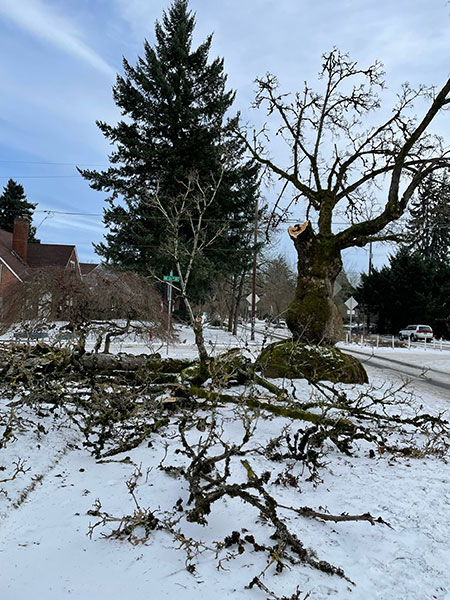
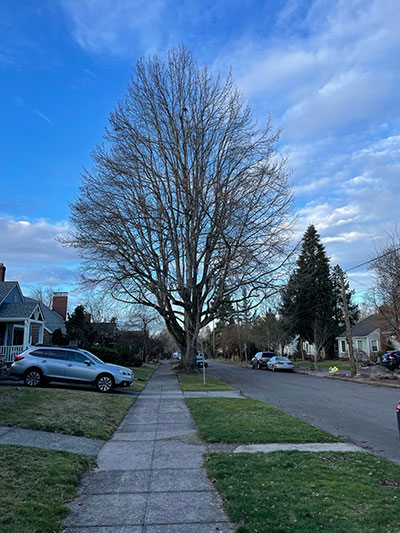
Damaged big leaf oak at Ainsworth Linear Arboretum, photo by Anna Brizbois.

After every storm or weather event, the infosphere we live in is filled with tales of disaster. Stories end in triumph, tragedy or near misses. Their collective effect on us is often one of fear or anxiety over what ifs. Tales of fallen trees after ice storms are no different. During the recent ice storm, our neighbors watched in awe as their 100-foot tall pine tree swayed from its base. We heard the creak of a Doug fir’s roots heaving in the lot behind us.

Why Do Trees Fall?

Trees fall because of heart rot or root rot. Heart rot is a disease caused by fungi that enter the tree through wounds in the bark and decay the wood at the center of the trunk and its branches. The diseased center softens, making trees structurally weaker and prone to breakage and falling.

Root rot is a condition in which the soil around a tree does not contain enough oxygen, due to excessive standing water around the roots.

Because the climate in Portland is so wet, both heart rot and root rot are hard to prevent. But there are visible warning signs that they are occurring. One indi- cation that heart rot has begun is the presence of mushrooms around the base of the tree. Yellowing and dying leaves can indicate root rot.

How Can We Prevent Trees from Falling?

Unharmed sweetgum, photo by Autumn Voirol.

It is tempting to cut down trees to prevent them from falling, but there are ways to protect our trees from damage and disease without eliminating them. One way is to provide good structural pruning based on species guidelines. It’s also important to follow a tree’s summer watering needs. For example, oaks don’t mind long, dry spells but dogwoods prefer steady water during drought. In addition, mulching and keeping heavy objects like cars and building materials away from the root zone prevents soil compaction and rot.

It is a good idea to conduct an annual inspection of trees around your home. Look for trunk damage, roots that circle above the ground, mushrooms and yellowing leaves. Larger, older trees can be evaluated by Urban Forestry staff.

Urban trees are a necessity because they protect us from heat, filter the water and air, and shelter wildlife. We need to work to protect both public and private spaces that house trees and we should continue to plant trees now so they are resources in the future. Most of all, we need to remember that healthy trees are our allies for a healthy future, and they need our help now and again to thrive.

The Concordia Tree Team volunteers prune street trees, maintain an arboretum at the former Meek school and help neighbors find resources for tree management. We invite you to join the Tree Team, water your trees (even the big ones) during summer heat waves, talk to your neighbors about trees and support tree-friendly policies. For more tree care tips and to get involved, check out our blog posts at ainsworthlineararboretum.org.

Mallory is a science educator that has lived in Concordia since 1995. She joined the Concordia Tree Team in 2019 and is an active volunteer with Friends of Trees.

Local Brings Surviving Trees from Hiroshima to Oregon

Posted on February 26, 2024 by Dina Sage Posted in Concordia News
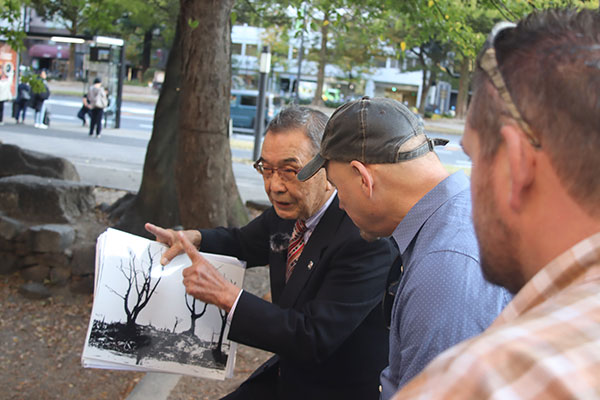
During their November 2023 visit to Hiroshima, Jim Gersbach (center) and Mike Oxendine
(right) listen to Japanese arborist Chikara Horiguchi discuss the Hiroshima Peace Tree
project. Photo by Chris John.

On August 6th, 1945, the U.S. dropped the atom bomb on Hiroshima, Japan, hoping to end World War II. The city was destroyed, all the trees were blackened and scorched, and locals were told that nothing could grow there for 75 years.

But the next spring, about 170 trees started leafing out. They came to be known as hibakujumoku; “survivor trees,” and the city of Hiroshima appointed arborist Chikara Horiguchi to care for them.

“About 15 years ago, a group of Hiroshima residents began to collect seeds from these aging trees,” Jim Gersbach, Public Affairs Specialist for the Oregon Department of Forestry, tells the story. “The seeds were sorted, cleaned and packaged at the Hiroshima Botanical Garden by volunteers and then distributed to some 40 countries.” Gersbach lives in Concordia and helped facilitate the Hiroshima Peace Trees project with Green Legacy Hiroshima, the nonprofit that was created for the cause.

Gersbach also serves as a board member for Oregon Community Trees (OCT), a non-profit aimed at promoting healthy urban forests. OCT took on the project of distributing the Hiroshima Peace Trees and Gersbach suggested offering the trees to commemorate the 75th anniversary of the end of World War II. The trees were first offered to official Tree City USA communities, cities that met stringent criteria to be considered tree-friendly. There are about 70 in Oregon, and close to half of them wanted a peace tree. Today the state of Oregon has the densest concentration of Hiroshima Peace Trees outside of Japan.

53 gingko and persimmon saplings were successfully germinated by fellow OCT board member Mike Oxendine. The saplings were given at no cost but recipients were required to plant the trees in public places and hold public ceremonies. Most ceremonies were postponed during the pandemic and when they could finally take place, took on many different forms. Sometimes city mayors or school superintendents gave speeches, poets read works, taiko drummers drummed or traditional koto musicians played, or local school children gave presentations.

By last year, Gersbach, some of his fellow OCT board members, and Kristin Ramstad at the Oregon Dept. of Forestry had found homes for all of the trees. To date, 49 entities in more than 3 dozen Oregon communities have planted peace trees. They are located at city parks, schools, botanical gardens, arboretums, cemeteries, and churches. Portland has three; two at Hoyt Arboretum, and one at Portland State University.

And the trees mean different things to different communities. Umpqua Community College in Roseburg planted one on the site of the 2015 school shooting there. The city of Talent held its tree ceremony shortly after the September 2020 Almeda fire. Many Japanese-American families in Oregon trace their ancestry to emigrants from Hiroshima, so there were also plantings by Japanese-Americans in Hood River, Ontario and Klamath Falls.

“These trees are venerated because they are resilient survivors,” says Gersbach. “Each of these trees is an ambassador of peace. No one in the wake of the war and tragedy of Hiroshima expected Japan and the U.S. to become friends. But even bitter enemies can work to become friends.”

In November, Gersbach visited Hiroshima to thank Green Legacy Hiroshima staff for sending their seeds to Oregon and to visit the two survivor trees that were parents of the ones now growing in Oregon. A filmmaker named David Hedberg joined Gersbach on the trip and is hoping to create a documentary about this project called “Seeds of Peace”. It should be completed in time for the 80th anniversary of the Hiroshima bombing in 2025. Stay posted for information on a viewing in Concordia.

Dina Sage is the Managing Editor for CNews and enjoys engaging in the arts and outdoor activities. She lives with her husband, daughter and their pets.

Historian’s Stand to Save Kennedy School

Posted on February 22, 2024 by Marsha Sandman Posted in Concordia News, History
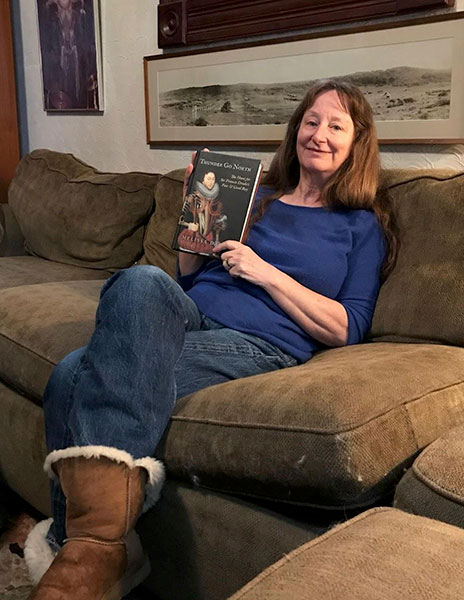
Darby in her home with her 2019 book Thunder Go North, about Sir Francis Drake’s famous voyage to the Oregon coast in 1579. Photo by Marsha Sandman.

Concordian Melissa Darby might be considered a time traveler. As an anthropologist, archaeologist, historian and author, she has gone back in time and brought history to the present.

What better place for her to live than in the 1800’s home that was once inhabited by the Kennedy family (the namesake for McMenamins Kennedy School.) Agnes Kennedy White moved on to a nursing home in her eighties and the Darby family took possession of the home. It was 1979. Except for an updated kitchen, bathroom and a few repairs, not much has changed since then.

White shared newspaper clippings and photographs of the Kennedy School, which had opened in 1915 and eventually closed in 1975 due to decline and low attendance.

“You know, someone really ought to do something about that school, it’s lovely,” White told Darby. Before Kennedy School was abandoned in the 1990’s, White told Darby that it was her turn to save the building.

And so, she did. But not without a struggle.

“So I called up the school district and said, ‘Hey, I think I’m going to nominate it to the National Register of Historic Places, and it’ll help bring in developers.’ They were not interested, they would not return my calls. I asked the school board, ‘Hey, can we talk about this? Can we get this on the agenda?’ I would send letters, but I got nothing back! I sent flowers to the superintendent with a little note saying, ‘If you receive this, would you let me know?’ I got nothing! Finally, I had nominated the building, and it got some attention from the Oregonian and from the school board. Since [the school district] was going to be represented at a public meeting, they eventually had to do something.”

According to Darby, “a group of neighbors, alumni, the mayor’s office, community members and others got together to save Kennedy School from the wrecking ball.”

Her efforts paid off — the property was preserved and McMenamins took stewardship in 1997.

If not for the efforts of Darby and her cohorts, we would not have this neighborhood treasure today nor would we be able to appreciate its remarkable architecture, history, and community events. Darby truly helped to preserve Portland history. One of the guest rooms is even named after her.

There’s also a painting hung at Kennedy School by artist Myrna Yoder depicting Darby and other McMenamins pioneers.

Since the opening of McMenamins Kennedy School, Darby has worked on archaeology and history projects throughout Oregon and Washington. For 6 years, she investigated Sir Francis Drake and the Golden Hind’s 1579 landing near Depoe Bay and in 2019, she published a book about it. The book is called Thunder Go North and is available at Amazon and on Audible.

She is still looking into the past and bringing it to the present.

After living east, south, north and west, Marsha Sandman is home at last. And she wants to hear your story. Contact her at MarshaJSandman@gmail.com.

Land Use and Transportation – New Plaza Has Potential for Fun and Community Engagement

Posted on February 16, 2024 by Web Manager Posted in Concordia News, Land Use & Transportation

By Kepper Petzing | Contributing Writer

The plaza at NE Killingsworth and 30th is a neighborhood asset. Photo by Gordon Riggs.

What is a Public Street Plaza?

In response to Covid, the Portland Bureau of Transportation (PBOT) allowed businesses to close off certain streets to create spaces for outdoor dining. As of late, PBOT has been transitioning some of these spaces into public street plazas where people can sit and read, friends and neighbors can gather, and communities can host events. Plazas help build community, increase pedestrian traffic near local shops, and make space for public events.

Concordia has its very own public street plaza at NE 30th and Killingsworth. Learn more about other plazas in town here.

Name the Plaza

Our plaza needs a name. You can enter the “Name Our Plaza” contest.

Design the Street Painting

After naming the plaza, keep your eyes open for our upcoming “Design the Street Painting” contest, as a mural will be painted on the street sometime between late May and mid-June. Help design the mural and the overall look of the plaza and suggest events we can hold there. The contest begins on March 15th.

Join Activities in the Plaza

The Concordia Neighborhood Association is working to plan two events each month at the plaza, beginning in March. Check the CNA website at ConcordiaPDX. org and find us on Facebook and Instagram to find out what is happening at the plaza. We hope to see you there.

Host Your Own Event at the Plaza

Think the Plaza is the perfect place for your knitting circle, book exchange, dance party, or doggy fashion show? PBOT makes it easy for you to put on free public events here in your neighborhood. Find out more information and fill out the application here.

Get Involved

The Concordia Neighborhood Association has a “Friends of the Plaza” committee focused on bringing community input to this space. If you have suggestions for plaza design or activities, or if you want to join our committee, contact Megan Gobble, CNA Board Member at SW2@ConcordiaPDX.org.

Kepper Petzing has lived in Concordia for 42 years. They are nonbinary. They love community and the public spaces where we can be together.

Community Connections – Meet The Old Crows

Posted on February 12, 2024 by Web Manager Posted in Concordia News

By Kathy Crabtree | Contributing Writer

The neighbors gather at Donohe’s home and call themselves The Old Crows. Photo by Kathy Crabtree.

At a house and raised patio on NE Ainsworth Boulevard, the side yard attracts a flock of crows. On further investigation, they seem to be enjoying pecking at food set out near a water basin where a few of the birds are drinking and splashing. Kathy Donohoe, standing on the porch, explains that she feeds them every morning. She is aware that a lot of people dislike crows. “Mostly because of their loud screeching, especially when [they’re] together as a flock in trees near the homes of sleeping residents,” she explains.

After her dog died, Donohoe found herself caring for an injured crow. “He had a hurt leg and hung out around the patio, waiting for scraps; I called him Hopper and started feeding him, and his friends joined him. It wasn’t long before I got into a routine of feeding them all every morning. But he hung around after the other crows went about their business. My mailman at the time, Ron, would watch for him, too. He said the other crows seemed to know I was taking care of the injured one.”

She and a few of her neighbors would gather on her patio to visit while enjoying the crows in the yard. “We started calling the patio The Crow’s Nest, and eventually, we acquired a collection of crow memorabilia, so we called our group The Old Crows.” When questioned about her continued fondness, Donohoe admitted to having a special place in her heart for the birds.

“After Ron found Hopper lifeless on the boulevard, the other crows still expected to be fed, but they left me a gift.” One morning, Donohoe found a rusted heart-shaped ornament on the Crow’s Nest table. The ornament now sits on the porch in a place of honor. “It’s a gift from the crows not only in gratitude for the food, but in honor of Hopper and my care for him.”

A few of The Old Crows group met over the holidays: Rosemary, Toni, and Theresa were invited by Donohoe to share their Valentine’s stories. When the discussion turned to love, Rosemary and Kathy shared their affinity for “bad boys,” back in the day. Toni talked about the importance of family and a mother’s celebration making Valentine’s Day special. Theresa shared that her definition of love is being a team, having each other’s back and being there for each other.

The Old Crows agreed, “It’s about finding a best friend.”

Kathy is a 65-yearold Nancy Drew wannabe, retired lawyer, and judge.

Changes and Additions to the Concordia Business Landscape

Posted on February 2, 2024 by Web Manager Posted in Concordia News, Local Businesses

By Nedra Rezinas | Contributing Writer

Teote closed late last summer. However, it is opening a location called Teote the Tavern at 5513 NE 30th Avenue. Teote isn’t the only thing different; driving and walking around our neighborhood, I’ve noticed a lot of changes to storefronts and businesses. Here’s a summary of the recent changes I’ve seen.

Alberta Street

Alberta Alley (3003 NE Alberta St.) has a new addition; Kaya, a cocktail bar that features 80s & 90s R&B music and elevated bar food. Kaya was inspired by the YouTube series “Kicks and Cocktails” which pairs cocktail drink recipes with specific sneakers.

Assembly Brewing will open its second location this winter on 2934 NE Alberta Street. Unlike the SE Foster location which only serves ages 21+, their Alberta location will serve all ages and offer five by-the-slice pizza options, whole pies, and more.

Vivienne, currently located on NE Sandy Boulevard, will be moving to 2724 NE Alberta Street and opening in the next couple of months. Vivienne is an independent, woman-owned cookbook store that carries kitchenware and linens. It also offers a daily wine bar, cookbook classes, and private parties.


Community Cycle Center (1700 NE Alberta St.) recently remodeled its storefront. Now it offers a new membership-based DIY workspace with thirteen stands, a smaller retail storefront with new and used items, and a bike repair classroom.

Bolt moved from NE 42nd to its new location on 2904 NE Alberta Street on November 9th. A fabric store with a focus on natural fabrics and sewing supplies, Bolt has been in Concordia for over 18 years.

Killingsworth Street

Autumn Coffee Cafe (3286 NE Killingsworth) is a new coffee spot providing fresh roasted, handcrafted coffee by the cup or beans you can take home and brew yourself. The 1600 block on Killingsworth is devoted to folks who enjoy plant-based and vegan products. Upper Moon Tattoo (5470 NE 16th Ave.), is a safe inclusive tattoo shop dedicated to using vegan and cruelty-free products. Orange & Blossom opened next door and is a modern, farm-focused, plantbased patisserie using seasonal, local and organic ingredients. Feral (1614 NE Killingsworth St.) opened in November with a focus on craft cocktails, natural wine, local beer and vegan cuisine.

NE 42nd Ave.

Queer Plants Cafe just opened in the former Miss Zumstein storefront on 5027 NE 42nd Avenue. Queer Plants Cafe is one part unique plant sale and one part cozy cafe, serving Coava Coffee, breakfast sandwiches, pastries, and bagels.

Misplaced Print Shop recently moved from Slabtown to 4831 NE 42nd Avenue. Misplaced offers custom screen printing for musicians, bars, restaurants, and nonprofits. It also has a retail selection of original printed-on accessories such as t-shirts, hats, and bags.

All these changes are exciting and invigorating to watch but it has been challenging for many businesses to keep their doors open since the beginning of the Covid outbreak. Let’s celebrate these new additions to our community and support these local businesses.

Nedra Rezinas lives near U of O in Concordia. She does marketing strategy for small businesses, is a mom, drinks tea, is a birder, and is passionate to build community.

Coexisting with Urban Coyotes

Posted on December 29, 2023 by Jordana Leeb Posted in Concordia News

“Neighbors, coyote sighting, NE 33rd at Going at 7:42am today, October 24. Heading confidently south on 33rd…absolutely unphased by passing traffic. Please keep your pets inside!” Being Neighborly – Concordia Facebook post, October 24th

A photo taken in 2010 that led to the start of Portland Urban Coyote Project. Photo by Sarah Chung.

Reactions to social media posts like this one range from enthusiasm, to fear, to curiosity. Some people share a link to portlandcoyote.com, the website for Portland Urban Coyote Project.

Portland Urban Coyote Project

Portland Urban Coyote Project (PUCP) is a citizen-science initiative started in reaction to an “eruption of coyote sightings in the NE Alameda neighborhood in 2010,” according to one of the project’s founders and current Project Advisor, Barbara Brower. PUCP, currently led by Zuriel Van Belle, is made up of researchers affiliated with Portland State University and Oregon State University who work in cooperation with the Portland Audubon and Oregon Department of Fish and Wildlife.

The three major goals of PUCP are to provide up-to-date information about living with coyotes, collect and map coyote sightings in the Portland metropolitan area, and conduct in-depth analyses of coyote sighting data and report on its findings. More specifically, the project aims to “help people be better informed, less afraid, and more appreciative,” says Brower.

Brower has lived in the Alameda neighborhood since 1994 and was a Portland State University geography professor for 25 years before retiring recently. She said that although “people have been trying to kill off coyotes for 200 years, they are here, were here, and will stay here” living amongst us and that we need to “figure out how to coexist.”

What does co-existing with coyotes mean in an urban environment, such as the Concordia neighborhood, where sightings are frequent?

How to Identify a Coyote

First, it’s important to accurately identify a coyote. According to the interactive tutorial on the PUCP website, a coyote (versus a fox or dog) can be identified by:

  • A tail that doesn’t touch the ground and that looks like a paintbrush with a tip dipped in black ink
  • Ears that are large and triangular
  • A weight of 25–40 pounds

Coyotes mate for life and typically have one litter every year or every other year. They often travel in packs in a family unit with their growing offspring. Although urban coyotes can kill backyard chickens and unsupervised small pets, there have been only two known fatalities of humans ever reported in North America.

Tips for Coyote Safety

A few key points to remember if you see a coyote:

  • Never feed a coyote, even by accident; make sure to secure garbage and compost.
  • Don’t approach coyotes, instead haze them (make loud noises) if they come too close.
  • Supervise your pets when they are outside.

Due to budget constraints, PUCP has yet to conduct research on whether the Portland coyote population is increasing (most likely; yes), their lifespan (most likely; about 10 years), or their main food source (most likely; rats). These projects may be done in the future if PUCP is able to secure additional funding.

If you are interested in learning more, reporting a coyote sighting, sharing a coyote photo or donating to Portland Urban Coyote Project, please visit PortlandCoyote.com.

Jordana Leeb is a longtime Concordia resident who i s passionate about the neighborhood, its residents and trees. She lives with her partner and dog on a street she calls home. You can see a film about her street and Concordia at Tinyurl.com/Diaryofastreet.

Concordia’s Christmas House

Posted on December 22, 2023 by Web Manager Posted in Concordia News

By Kepper Petzig | Contributing Writer

Visit Concordia’s Christmas house on NE 32nd Ave. between NE Jarrett and Ainsworth. Photo by Jack Wallis.

It started with a string of lights. Jack and Georgene Wallis had no idea of the Christmas obsession that would descend upon them. They were high school sweethearts from Puyallup, Washington. After they got married, Jack joined the army and Georgene followed him to Germany. As Jack was finishing his 15-year military service in 1990, Georgene and their new baby Jordann moved into their Concordia house off of Ainsworth. There were no decorations that first Christmas.

Jack joined Georgene and Jordann the next year. That Christmas they did a simple outline of their house in lights. Over the years they added second daughter Justene–and a whole lot of Christmas decorations. They hunt through Goodwill and look for sales. A new piece or two each year for 32 years really adds up.

Today their Christmas decorations draw onlookers from across the city. They get lots of outdoor visitors, including at times a tour bus and a limousine. Sometimes they get thank you cards and once, a little girl brought them cookies. One family hosts their annual family Christmas picture in front of the display.

“I think you can see it from the air when the planes come to land at PDX,” jokes Jack. Neighbors call it Peacock Lane (Portland’s festive “Christmas street” between SE Stark and Belmont) in one house.

The Wallis’ have a strict rule – Christmas decorations are turned on December 1st and have their last night December 31st. Jack admits that the motivation to begin set-up gets harder each year. His bones are aging. But, once he starts, the joy kicks in. Jack is the master artist, rearranging things each year to keep it fresh. Jordann and Justene critique the final display. Last year his kids banned Jack from the highly sloped roof. It hurts his heart because “that is where Santa and Rudolph truly belong.”

The inside is not neglected. They always have a big Christmas tree, visible through the window, and every room is decorated. Over the years they added an audiovisual display. To be respectful of the surrounding houses, Jack keeps the sound low and turns everything off at 10 pm.

It’s not just an artistic puzzle to fit everything in, but a practical one as well. To keep the breakers from tripping, each display is on a timer because the system can’t handle all of them at once. Georgene handles the invisible parts, such as changing the light bulbs. It takes about 24 hours, spread over several days, to set it up and 8 hours or less to take it down and store it away for next year. How big is the electric bill? “We don’t look.”

Like proud parents, Jack and Georgene decline picking a favorite decoration. All are loved. Jack says they just want to spread the joy and help to create memories. Stop by and see Concordia’s Christmas house at 5840 NE 32nd Avenue (not Place) this holiday season.

Kepper Petzing has lived in Concordia for 40 years, where, with their partner Lowen, they raised two children. They are nonbinary. They love community and are grateful for Concordia News.

Alberta Main Street Active Again and Seeking Volunteers

Posted on December 15, 2023 by Web Manager Posted in Concordia News, Volunteer Opportunities

By Elise Scolnick | AMS Volunteer

Alberta Main Street volunteers clean up NE Alberta Street for the SOLV clean-up
project. Photo by Elise Scolnick.

What is Alberta Main Street?

Alberta Main Street (AMS) is a nonprofit aimed at “advancing efforts to develop Alberta Street as a vibrant, creative, equitable and sustainable commercial district serving residents, businesses and visitors of our community.” AMS has supported local businesses and community builders for the past 13 plus years through business help, community events, clean-ups, design and art projects. As a volunteer-led nonprofit, AMS has always relied on its residents, artists, business owners/employees, and other partners to successfully achieve its goals. Following a period of inactivity, AMS is becoming active again and recruiting volunteers. A social mixer was held at Baerlic Brewing on October 18th to reach out and reintroduce AMS to new and seasoned businesses.

History of AMS

Alberta Main Street became a non-profit in 2010. Prosper Portland, an organization that partners with non-profits to build a more equitable economy, chose four Main Street Programs, including AMS. The founding Executive Director of AMS was Sara Wittenberg, who built the organization into a volunteer-led community and business support network. Wittenberg passed away in 2018, deeply affecting the community and the board.

In 2019, primarily in honor of Wittenberg’s, volunteers’ and the board’s work, AMS received a National Main Street Award, a prestigious recognition of all the work done over previous years to improve and revitalize the Alberta Street business district and community.

Dormancy During Covid

During the height of the Covid pandemic, Alberta Main Street, like many other organizations, encountered challenges that it is still recovering from. In 2020, AMS pivoted to focus on helping businesses navigate federal relief funds and hosted community events online, including a virtual Alberta Street Fair.

By 2021, the Board had to step back from organizing events and focused instead on developing new goals in line with diversity, equity and inclusion. Funding had dried up, and in May of 2021, AMS experienced severe budget cuts and several staff had to be let go. Since 2021, AMS has been working on:

  • Support for businesses
  • Maintenance of Black Heritage Markers, signs along Alberta Street depicting the stories of 10 African Americans from NE Portland
  • Virtual and live events such as BIPOC markets, cleanups
  • The installation of new trash cans through collaboration with the city

Current Status

Fast forward to 2023 and Alberta Main Street is at a critical juncture. Board members have stepped down or their terms are ending and there is an urgent need for new direction.

We are reaching out now to provide an important update and to ask for your critical input. As a community nonprofit, AMS needs dedicated folks to step up and help navigate the road ahead. Special skills we’re looking for include legal support, financ, web design, volunteer coordination, grant writing, fundraising, nonprofit administration, organizational development, marketing and event planning fields.

We ask board members for a commitment of 5-10 hours per month. Usually the board meets once a month.

If you have any of the skills above or you would like to volunteer for specific events such as street cleanups, holidays, sidewalk sales or the annual street fair, contact James Armstrong, Board President at: james@albertamainst.org. Check out the AMS Facebook page at Facebook.com/albertamainstreet

Elise has lived in NE Portland neighborhood since 1979 and was one of several o r i g i n a l organizers of the Alberta Street Fair. From 2003- 20 0 6, she owned Tribe of the Winds Gallery at NE 22nd and Alberta. She served on the Alberta Streetscape Committee, on the Board of Art on Alberta and was a member of the Alberta Street Business Association, the precursor to Alberta Main Street. Aside from a break between 2021 and 2023, Elise has been on the Board of Alberta Main Street since 2016 and is currently serving as Interim Board Vice President.

« Previous Page
Next Page »

To connect Concordia residents and businesses – inform, educate and report on activities, issues and opportunities of the neighborhood.

Concordia Neighborhood Association will abstain from publishing anything that could be construed as libel.

Upcoming Events


CNA Meetings

Click here to learn about upcoming CNA meetings and how to attend.

CNA’s Facebook Group

Join us for neighborhood discussion, event updates, meeting minutes and more on our Facebook Group.

Categories

  • Archive
  • Arts & Culture
  • CNA
  • Concordia News
  • CU Sale
  • Events
  • Family
  • Gardening
  • Health and Wellness
  • History
  • Land Use & Transportation
  • Local Businesses
  • News from the NET
  • Opinion
  • Schools
  • Trees
  • Uncategorized
  • Volunteer Opportunities
CyberChimps ©2025