
By Garlynn Woodsong | Contributing Writer
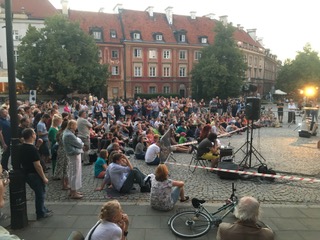
August has a different rhythm. School is out. Evenings linger. Porches fill. Food carts stay open a little later. A guitarist appears in the park. Neighbors who spent all winter waving from behind windshields suddenly find themselves talking for half an hour on the sidewalk.
None of this happens because a city ordinance requires it. It happens because people are given places where gat hering feels natural.
Urban planners spend a great deal of time thinking about physical infrastructure. We debate street widths, housing types, bike lanes, transit, stormwater, and zoning. Those conversations matter because they shape the framework within which daily life unfolds.
But there is another kind of infrastructure that deserves equal attention: cultural infrastructure. Not museums or concert halls, although those certainly have their place. I mean the everyday spaces where community comes alive: an alley dinner, a porch concert, a park where strangers become dancers. These moments may seem temporary, but they create something remarkably durable. They build trust between neighbors and become part of a neighborhood’s identity.
Ask someone why they love a particular place, and they rarely beg in by describing setback requirements. They remember the block party, the neighborhood café, the summer concert, or the conversation that lasted until sunset. Those experiences become part of the civic memory of a place.
The best public spaces don’t need to be elaborate. They need shade, places to sit, good lighting, trees, art, and room for people to bring their own creativity.
Great public spaces don’t manufacture culture. They make it easier for culture to emerge. That distinction matters. The strongest neighborhood traditions rarely come from City Hall. They grow when people have room to experiment: a movie night, local music, shared meals, a weekly gathering that slowly becomes a tradition.
And planning can either encourage those moments or unintentionally make them harder. Rules that discourage outdoor dining, temporary performances, or flexible use of public space don’t just regulate activity. They reduce opportunities for neighbors to create community. Cities that invest in welcoming public spaces and make it easier to host small events often discover that residents do the rest. Joy, it turns out, is remarkably self-organizing.
That matters for reasons beyond entertainment, because communities where people regularly gather become more resilient. Neighbors who have shared meals, music, and celebrations are more likely to recognize one another, lend a hand after a storm, or check on someone during a heat wave. The healthiest cities are not simply efficient. They are places where people genuinely enjoy being together.
As another Portland summer w inds dow n, I hope we take advantage of these long evenings. Walk instead of drive when you can. Stop at the food cart or the taqueria with the line of regulars. Listen when you hear music drifting across the park. Stay for the conversation after the event ends. Host a potluck block party with your neighbors. Cities are built over decades Community is built one gathering at a time.
Place Stories
A question for readers: What place in or around Concordia makes you feel most connected to your neighborhood? Maybe it’s a park, a food cart, a café, a front porch, a community garden, or someplace entirely unexpected. Please share your story by emailing it to CNewsEditor@ConcordiaPDX.org, with the subject line “Place Stories.” Your letter may be published in a future issue of Concordia News.
Garlynn Woodsong is a Concordia neighbor, planner, and dad who cares deeply about the city his son will inherit. His work centers on housing, climate action, and the everyday design of walkable, people focused communities. He welcomes ideas and questions from readers at garlynn42@gmail.com.


