Concordia Neighborhood Association | Portland, Oregon

  • Home
  • Get Involved
    • Upcoming Events
    • Events Calendar
    • CNA Meetings
    • Land Use & Transportation Committee (LUTC)
    • Media Team
    • Concordia Commons
    • Concordia News Submissions
    • Our Association
      • Bylaws
      • Directors & Staff
      • Donate
  • Concordia News
    • Advertise
    • Concordia News Issues
    • Write for Concordia News
  • Community Room
    • Community Room Rental
    • Community Partners Guidelines
    • Community Room Calendar
  • Resources
    • Services & Agencies
    • Schools
  • Contact

Author Archives: Web Manager

Concordian doctors pets, both on and off the job

Posted on June 15, 2019 by Web Manager Posted in Concordia News

By Tamara Anne Fowler | CNA Media Team
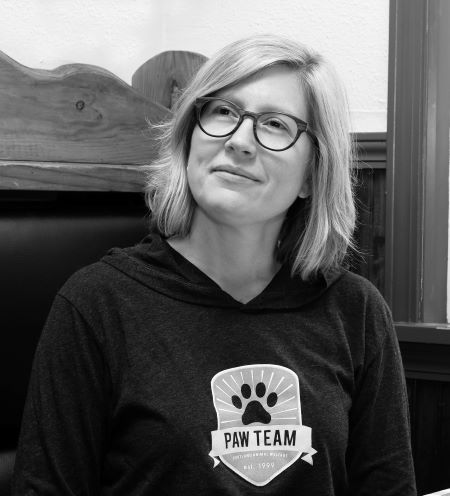
Veterinarian Margaret Wixson
Veterinarian Margaret Wixson loves her Concordia
neighborhood, caring for animals at the Oregon Humane Society, and especially for those that belong to the homeless and impoverished. Photo by Lloyd Kimeldorf.

The fear is that the day may come when only the wealthy can afford pets. With the rising cost of pet deposits and rents, as well as veterinary care, that time might not be far off.

Enter Portland Animal Welfare (PAW) Team. PAW Team provides free veterinary care to the animals of people experiencing homelessness and extreme poverty. PAW Team offer vaccinations, some surgeries as well as spay and neuter services, and has been a part of the Portland community for the past 10 years.

In the recent past, there were no overnight shelter options for people who had pets – causing many to have no other option than to spend their nights on the street. Now, recognizing how important this is, some shelters are starting to allow pets.

Concordian Margaret Wixson volunteers for PAW Team.

Landing her first job out of the University of California, Davis veterinary program, Margaret works at the Oregon Humane Society (OHS). She spends her weekdays working as a shelter veterinarian there.

During her off hours, she serves on the board of PAW Team. She has been doing so for the past year.

Margaret volunteers at drop-in clinics and provides phone and email consultations when she can’t be there during the week. “We have a team of amazing vets who see patients during the week,” she pointed out.

By the time a diagnosis reaches Margaret, the pet has been seen by the PAW medical team and comes with a plan of action.

PAW Team uses donated surgery spaces to conduct the spay and neuter clinic a few times a year. Those days are labor-intensive, including identifying volunteers to help some clients who don’t have transport.

So PAW Team relies on volunteers to caravan them.

Concordia is Margaret’s favorite neighborhood. She loves the linear arboretum on Ainsworth, and she appreciates how close she is to 42nd Avenue, and Dekum and Killingsworth streets.

She also finds it a dog-friendly neighborhood and enjoys the dog parks. “I know my neighbors by their dogs,” Margaret admitted. “I know the dogs’ names, not the names of their owners.”

Being bike accessible is another amenity that impresses Margaret. But, even more, she is thrilled being a part of PAW Team. “Nobody should ever have to make the decision between their meds and their dog’s meds.”

Tamara Anne Fowler is Edit Kitten, a writer with 20-plus years of experience offering a sof ter, gentler approach to editing and coaching. Her personal editors — Armani, Max Factor and Spicey’D — are also her cats. Visit her at EditKitten.com or contact her at Tamara@EditKitten. com.
He assembles items to represent his worldview

Posted on June 9, 2019 by Web Manager Posted in Arts & Culture, Concordia News

By Joel Dippold | CNA Media Team

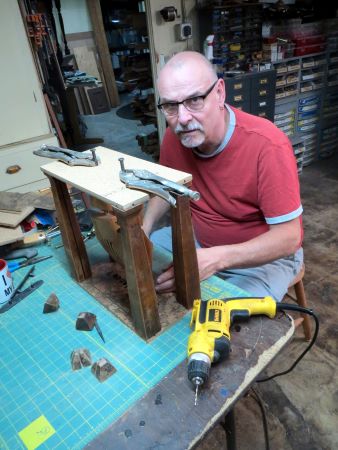
Dan Pillers, Concordian and celebrated artist, uses artifacts and curiosities as the building blocks of his work. Photo by Ryan-Michael Riel
Dan Pillers, Concordian and celebrated artist, uses artifacts and curiosities as the building blocks of his work. Photo by Ryan-Michael Riel.

A thought slowly comes over you as you stand in a room full of Dan Pillers’ exquisite works of art: “The inside of this guy’s studio must be pretty amazing.”

Dan practices bricolage, assembling found objects into elaborate representations of his worldview, and his identity. His perspective is one of a gay man born in the Eisenhower administration who survived the AIDS epidemic in San Francisco and has lived a quiet life in Concordia for the past dozen years.

The basement studio of his Ainsworth bungalow is crammed with cabinets full of artifacts and curiosities, the building blocks of his art. The artifacts and woodwork come from thrift shops, yard sale free boxes and sometimes gifts left on his porch by mysterious benefactors.

His art is a mix of memoir, history, politics and popular culture. His pieces often take the shape of a glass case with elaborate woodwork – sometimes Victorian, sometimes mid-century modern. Etched onto the glass are ornamental designs or provocative bits of text.

And in the center of this space, often suspended in midair, is a central object of contemplation – some small thing of singular beauty, of wonderment, evocative of lost time or an emotion you can’t quite pin down.

Dan’s training as an artist includes a bachelor of fine arts degree from the San Francisco Art Institute, residencies in France, and gallery shows up and down the West Coast.

But, as he excitedly shows a visitor some of the truly singular artifacts he’s collected, he repeatedly mentions his residency with a Metro program called “Glean.” Each year it gives a handful of local artists unlimited access to the local dump.

Next up for Dan is a joint show in June at the Guardino Gallery, 2939 N.E. Alberta St. There, you can see nearly a dozen of his pieces. In addition to the show through June 25, he is booked for an opening reception Thursday, May 30, 6-9 p.m., and an artist talk Saturday, June 15, 2 p.m.

Before you go, visit DanPillers.com or watch a three-minute video portrait at Vimeo.com/51840518.

Joel Dippold is a freelance writer and editor who has lived in Concordia since 2000.

Art Walks resume on Alberta

Posted on June 2, 2019 by Web Manager Posted in Concordia News

By Nancy Varekamp | CNews Editor

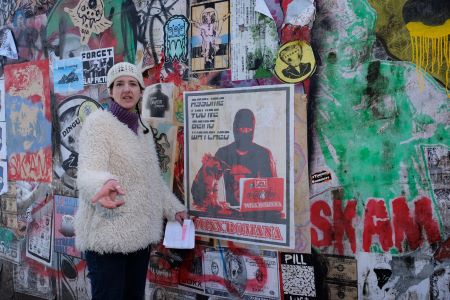
Maquette Reeverts leads Public Art Walks sponsored by Alberta Art Works this summer.
Maquette Reeverts leads Public Art Walks sponsored by Alberta Art Works this summer. She offered CNews a preview walk on a chilly, rainy morning. Photo by Lloyd Kimeldorf

Put on your walking shoes. Alberta Art Works is offering its third summer of Public Art Walks.

Ninety-minute walks are led by volunteers from Alberta Art Works, the nonprofit that has served for six years as a catalyst for creating public art to celebrate, beautify and create community. Purchase tickets for upcoming walks at AlbertaStreetGallery.com.

“Public Art Walk,” a self-guided tour brochure, is available free in many Alberta Street businesses. And, as of last year, you can download an app from TipTour.org for an audio tour that features voices of the muralists.

“There’s nothing new about public art,” said Maquette Reeverts, a member of the Alberta Art Works board of directors who leads the tours. “Street art was born on the Roman wall paintings in Pompeii. And 1970s and 1980s New York City was the midwife.”

There are many forms, several represented on Alberta Street. What they have in common, according to Maquette is they communicate. Statements – social, cultural, economic and political – add beauty to otherwise drab walls, ATMs, benches, sidewalks and more.

“During the tours we discuss what is sanctioned and unsanctioned street art, and we talk about the concept of public art and public space,” Maquette explained.

“Murals are the best form of graffiti abatement to date.” Taggers tend to respect muralists’ statements and tag elsewhere.

When a mural is tagged, the reasons vary. It could be a tagger’s retribution on a muralist he or she doesn’t like or a demonstration of disrespect for the mural. It might simply point out the mural is in need of repair.

Maquette has several favorite murals, each for a different reason. One is the “free wall” at south of Alberta Street in the alley between 27th and 28th avenues. It’s one that anyone is allowed to paint on at any time.

“It’s forever going up and coming down. The social and political artwork is incredible,” she said. That “sanctioned” wall is painted over every 12 months and artists and taggers begin anew. It’s currently one of two in town. (See ConcordiaPDX.org/2019/05/free-walls.)

Maquette is proud to see the community involvement in the Cycling Center’s mural on 17th Avenue. Fifty volunteers participated to paint it.

There are many mediums. Mimosa studios’ mural doesn’t use paint. Instead, hand painted tiles – created and fired in the ceramics studio – adorn its storefront. And The Station has installed the first participatory street art on Alberta – a blackboard for anyone to write on.

“Each piece of street art here is beautiful,” Maquette pointed out. “And each has something to say.”

Nancy Varekamp is semiretired from her career in journalism, public relations and – her favorite work engagement – writing and editing targeted newsletters.

CNA Voices – Recycle June 1, and always

Posted on May 30, 2019 by Web Manager Posted in Concordia News

It’s that time of year again! Clean up season. Many surrounding neighborhoods have had their collection events already. Concordia neighborhood’s event is Saturday, June 1, from 8 a.m. to 12:30 p.m. at the northeast corner of 42nd Avenue and Killingsworth Street.

It is organized by wonderful Concordia neighborhood volunteers and, in addition to helping the neighborhood clean out their spaces, this event raises money for the neighborhood association. That helps us produce this entertaining, informative, creative newspaper, and to host the spring egg hunt, the concerts in the park and other community events.

I hope you get a chance to come see us on Saturday. Please contact Katie Ugolini if you’d like to volunteer.

I have been on the neighborhood association board for about three years, having joined right about the time I became a Master Recycler. This article is a great chance for me to remind my neighbors about the wonderful resources the city provides to help us all take small steps to keep Mother Earth healthy.

The Portland Bureau of Planning and Sustainability website has a super section, ResoursefulPDX.com. It boasts ideas for you to make simple changes in your everyday choices to help you create less waste. The site has ideas and tips on how to:

  • Buy, like choosing quality durable products rather than disposable items
  • Reuse, like shopping at secondhand stores
  • Borrow and share, like visiting the tool library
  • Fix and maintain, like getting the soles of your favorite shoes fixed instead of buying new.

There is even a map to help you find resources in your neighborhood, or for a friend who might live in another neighborhood. Metro’s website also has an awesome section, OregonMetro.gov/tools-living. It has four subsections of earth-friendly tips and tricks:

  • Dealing with garbage and recycling
  • Living in a healthy home
  • Creating and maintaining a pest-free yard and garden
  • Getting around town using public transportation

There is a search option on each page so you can find anything you are looking for. The Garbage and Recycling page reminds us, “That stuff you’re parting with might not be trash,” and has an extensive database of places that may recycle or reuse the things you don’t need anymore.

Another great option is to simply call Metro at 503.234.3000, from 8:30 a.m. to 5 p.m., Monday through Saturday. There is so much wonderful information out there. I hope you can take the time to check it out.

Heather Pashley was born in Portland and grew up playing at Fernhill Park. She has worked for OHSU for more than 20 years, worships at St. Charles Borromeo Catholic Church, and she has never strayed far from her beloved Concordia neighborhood.

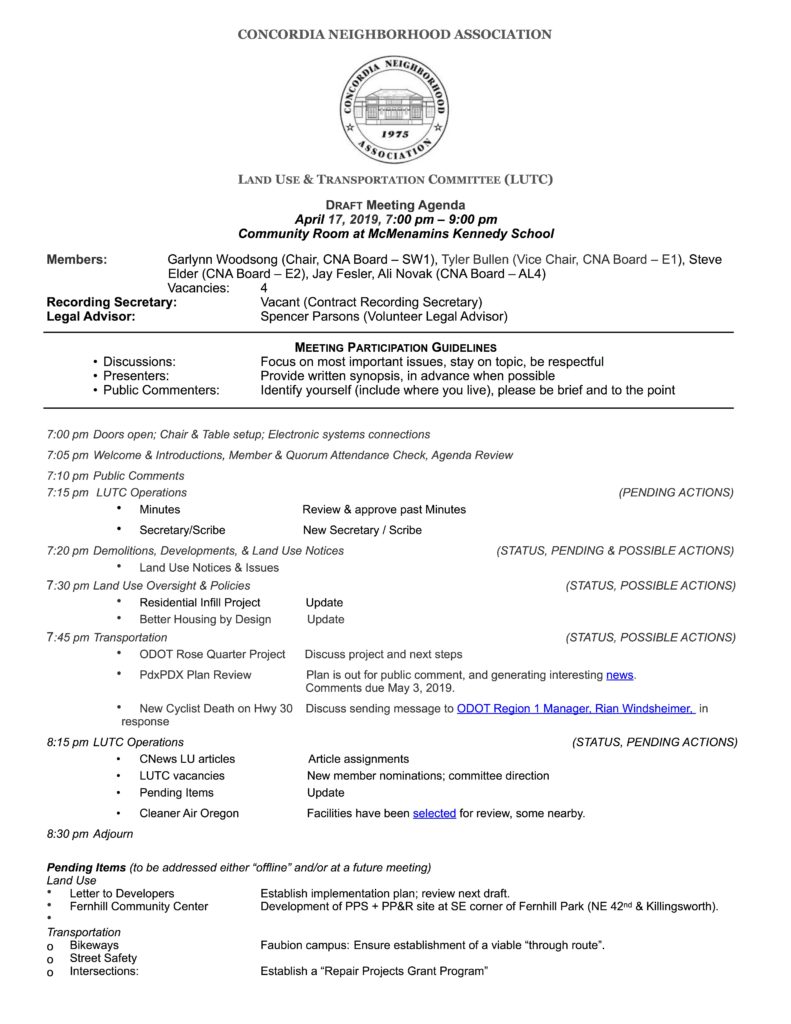
CNA LUTC: April, 2019 Meeting Draft Agenda

Posted on April 11, 2019 by Web Manager Posted in Land Use & Transportation

Hi folks,

We’ll be meeting this coming Wednesday, April 17th from 7 to 9 pm in the Community Room in the SE corner of McMenamins Kennedy School. Here’s the draft agenda:

CNA LUTC Agenda: April 2019

See you there!

cheers,
~Garlynn

Why are the lots on my block extra long?

Posted on March 20, 2019 by Web Manager Posted in Concordia News, History

By Doug Decker | Historian

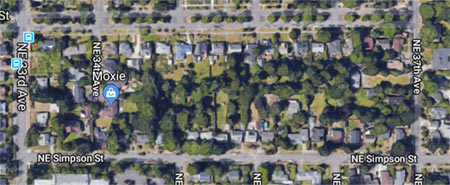
The question: We live on 35th and Ainsworth in a home built in 1941 and – like the rest of our neighbors between 33rd and 37th circling the blocks of Ainsworth and Simpson – we all have lots 50 by 230 feet. Why do you suppose the lots on this block were platted so long?
– Rose and John Yandell

The historian reports: The long, narrow configuration of this block stems from decisions made more than 100 years ago by John D. Kennedy. He once owned much of the property between Killingsworth and Ainsworth streets, and 33rd and 42nd avenues, and Kennedy School was named for him.

The Irishman immigrated to Oregon in 1866, found his way to Baker City and worked in and then owned a dry goods store.

After coming to Portland about 1881, Kennedy bought this property, originally part of the 1855 Isaac Rennison Donation Land Claim. It was outside the city limits and far from any developments.

Kennedy was ahead of his time in the market. Northeast Portland’s ripeness for real estate didn’t take place until the years after the 1905 Lewis and Clark Exposition, when it seemed anyone who could was buying property or building houses.

But Kennedy had platted these lands as the Kennedy Addition back in 1890, a grid of 15 square blocks with more than 200 lots. Two years later, he platted Kennedy’s Second Addition, adjacent to the east, with room for another 120 homes.

Several other nearby plats were filed about that time, but they were also just lines on paper. There was no market yet for residential development. So, in 1906, city council approved his petition to “vacate” five of the blocks in his addition. That officially eliminated platted streets, even if they didn’t yet exist – like all of the north-south streets in the block between Ainsworth and Simpson, from 33rd east to 37th.

Kennedy’s stated rationale was to sell the larger chunk of land as acreage for farm fields.

As urbanization spread in the years that followed, neighborhoods were built to the north, south and west, but the 12-acre parcel – with no north-south through streets – stayed as one big block in farm use.

Kennedy died in December 1936. In 1938 the property was controlled by Ward D. Cook, a Portland insurance and real estate agent, who designated 80 lots on the long block ready for construction.

After World War II the market truly picked up. Most of the houses were built and sold between 1940 and 1950.

So there you have it. In the original Kennedy’s Addition plat, that one long block was going to be five blocks. But then Kennedy did away with the blocks to better sell the property, which he never did.

The market came and went and came back again. Then another speculator saw opportunity and turned the island of farm into the more than 50 lots there today, most of them a very long and narrow quarter-acre each. Read more and check out maps and historic aerial photos on this topic at AlamedaHistory.org.

Ask the historian is a CNews standing feature that encourages readers to ask questions about the history of the neighborhood and its buildings. Is there something you’ve wondered about? Drop a line to CNewsEditor@ConcordiaPDX. org and ask Doug Decker to do some digging.

Mark your calendar for Vanport Mosaic Festival

Posted on March 19, 2019 by Web Manager Posted in Concordia News, Events

The 2019 Vanport Mosaic Festival returns for its fourth event May 21-June 2, organized by community-driven nonprofit Vanport Mosaic.
“Through exhibits, documentary screenings, tours, performances and dialogues, we will celebrate the lessons of resilience and resistance as defined and told by historically oppressed communities,” reported the festival’s Facebook page.

The multi-disciplinary festival has received the Oregon Heritage Excellence Award, the Spirit of Portland Award and the Columbia Slough Watershed Council’s Achievement Award. Returning sponsors and funding sources are Oregon Historical Society, Portland Bureau of Emergency Management, Multnomah County Drainage District, Port of Portland, Regional Arts & Culture Council and Multnomah County Cultural Coalition.

The festival is seeking more sponsors, funders and volunteers. For details, contact Info@VanportMosaic.org or visit Facebook.com/events/318232912147588.

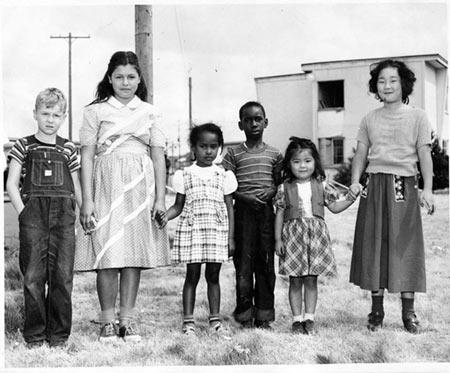
Photo courtesy of Vanport Mosaic Festival, Oregon Historical Society digital file no. ba018658

$5 million grant goes to CU business school

Posted on March 13, 2019 by Web Manager Posted in Concordia News

Concorida University Portland, Oregon logo
Concordia University (CU) in February received the largest financial contribution in its 114-year history.

The $5 million grant from the Robert D. and Marcia H. Randall Charitable Trust will establish the Robert D. Randall Endowed Chair for Business and Technology.

According to university officials, that chair will expand the CU School of Management’s focus on an innovative business education and technology program.

“This gift will be transformative in advancing Concordia’s commitment to developing ethical and impactful leaders,” said Michelle M. Cowing, Ph.D., school of management dean.

“Concordia Portland will continue its long history of innovative partnerships to solve difficult societal and business challenges throughout the Pacific Northwest.”

The focus for the business & technology program is driven by the unique makeup of the regional economy, she added. It’s one fueled by homegrown businesses as well as global enterprises.

A new clinical model and technology curriculum will be co-designed with regional business leaders working in small and large businesses alike, startups and the growing tech sector.

According to the dean, engaging students in a variety of clinical experiences and a strong technology emphasis will prepare future leaders who are able to help businesses respond to ever-increasing economic and technological change.

The $5 million grant kicks off a university campaign to raise an additional $1.25 million. That’s also for the university’s business program, which is now named the Randall Fellows Clinical Program for Business & Technology.

Local students illustrate book

Posted on March 12, 2019 by Web Manager Posted in CNA, Schools

By Karen Lotts | CNA Media Team

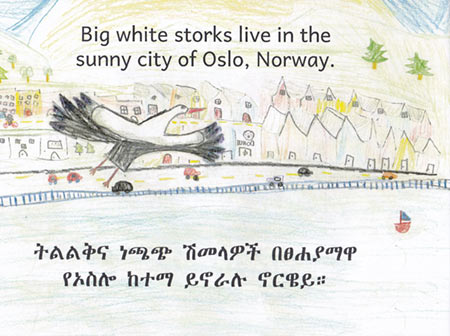
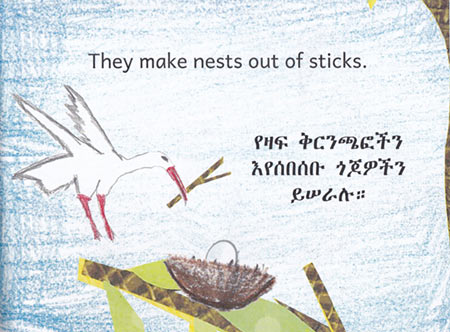
Vernon Elementary School fourth graders collaborated with Ethiopian literacy advocates to produce a book. It’s available now on Amazon.com but, more to the point, it’s being distributed to children in Ethiopia. Art reprinted with permission from Open Hearts Big Dreams Fund.

A group of Vernon Elementary School students are officially published illustrators thanks to a collaboration between their fourth grade classes and authors/Ethiopian literacy advocates Jane and Caroline Kurtz.

The students’ drawings appear in the children’s book “Home,” written by the Portland-based Kurtz sisters. It tells a story of immigration framed in a tale about white storks that migrate annually from Europe to Ethiopia.

The text is written in both English and Amharic, one of the three main languages spoken in Ethiopia.

According to the sisters, who grew up in Ethiopia, children’s literature is just taking root in that country. There are still limited options for beginner books that both appeal to children and are written in Ethiopian languages.

To help meet this need, Jane co-founded the nonprofit Ethiopia Reads 20 years ago and in 2016 began writing stories for Ethiopian children learning to read. Jane and Caroline now volunteer as creative directors for Ready Set Go Books, a project of the Seattle-based nonprofit Open Hearts Big Dreams.

They have collaborated previously with community volunteer illustrators through churches or community college art programs. The project with Vernon came to life last spring when teacher Marie McMahon asked the sisters if they’d be interested in her students contributing to their next book.

“When my students heard that they could be a part of making a difference in other children’s lives by increasing access to literacy, they were immediately on board,” Marie said.

During a presentation at Vernon, Jane and Caroline spoke to the students about growing up and going to school in Ethiopia and the importance of these books to the young readers there.

Art reprinted with permission from Open Hearts Big Dreams Fund.

In the pursuit of authenticity, the students then researched Ethiopian landscapes and white storks before meeting with volunteer illustrator Jordy Farrell, from Ready Set Go Books, who offered illustration tips.

Using additional background art from a previous collaboration with students in Beaverton and combining it with the illustrations from Vernon students, a colorful book was ready to be published online and printed in Ethiopia.

The Vernon community has reacted warmly to the philanthropic project, and gathered recently at Cafe Eleven for the debut of the book and copies signed by the student illustrators.

“As a published author, I face incredible odds…a hard craft journey…and the payoff is in seeing readers connect with my books,” Jane said. “I think something similar happened with these students.”

The books are available through Amazon.com. Involvement opportunities can be found via EthiopiaReads.org and OpenHeartsBigDreams.org.

Karen Lotts is a local freelance writer who helps local small businesses and nonprofits connect with their audiences through copywriting. She can be reached at KarenLotts.com.

Bikeways diversion plan awaits city action

Posted on March 6, 2019 by Web Manager Posted in Concordia News, Land Use & Transportation

By Garlynn Woodsong | Chair, CNA LUTC

A few years ago, the city of Portland solicited feedback from the Concordia Neighborhood Association (CNA) about the 20s Bikeway project.

One of our responses was to request diverters at major streets in our neighborhood – such as Prescott and Killingsworth – to prevent cut-through car traffic from turning onto the narrow one-lane streets on which the 20s Bikeway is routed. That practice can stress out potential bicyclists on the route who may be interested in bicycling more, but are concerned for their safety.

But we were told the city would only install diverters on streets with higher than a certain amount of automobile traffic.

They then informed us they had changed their policies, and now they only installed diverters on streets with sufficiently high traffic volumes. They measured the traffic volumes in Concordia, and the single-lane streets of the 20s Bikeway project didn’t have enough cars to meet their new standard (for two-lane streets), so therefore they didn’t feel diverters were necessary.

I’ve told this story to folks around the city. In doing so, I’ve found a coalition of folks who also want to see physical diversions installed to protect our investment in the bicycle greenway system and keep it safe for bicyclists of all ages and abilities.

Together we developed a communitybased policy proposal called “Diversion on Bikeways as Urban Form.” The basic concept is that the urban form of bicycle greenways should include diverters to ensure that they are local-access-only for motor vehicles, while allowing bicycles to continue as through traffic.

The idea is the same as the existing urban form standard for sidewalks that includes wheelchair ramps where sidewalks meet street intersections, and for driveways that includes ramps and aprons where driveways meet streets.

This policy proposal is endorsed by CNA, the Northeast Coalition of Neighborhoods, SE Uplift and BikeLoudPDX.

Those groups presented this policy proposal to Portland Bureau of Transportation (PBOT) staff in December. We were told PBOT will take no further action until it fills its new greenways coordinator position.

Once this policy is adopted officially, it includes a strategy to deploy temporary installations initially to test each diverter location. It advises using kiosks to allow neighbors to provide feedback to PBOT, so temporary installations can be moved or adjusted, retested and perhaps moved and tested again, before being made permanent.

This sort of iterative public feedback loop is proposed as a more effective version of public engagement.

Traditionally, public engagement involves discussions in meeting rooms far from actual installation sites. Feedback thus received comes from people who haven’t yet interacted with the physical diversions in question as a part of their daily travels.

We look forward to working with the city to test this new policy to help encourage more bicycling in Portland – in a way that is respectful of and responsive to the concerns of neighbors and roadway users.

Garlynn Woodsong lives on 29th Avenue, serves on the CNA board and is an avid bicyclist. He also is a dad who is passionate about the city his son will inherit. He is the planning + development partner with Cascadia Partners LLC, a local urban planning firm. Contact him at LandUse@ ConcordiaPDX.org.

« Previous Page
Next Page »

To connect Concordia residents and businesses – inform, educate and report on activities, issues and opportunities of the neighborhood.

Concordia Neighborhood Association will abstain from publishing anything that could be construed as libel.

Upcoming Events


More Upcoming Events

CNA Meetings

Click here to learn about upcoming CNA meetings and how to attend.

CNA’s Facebook Group

Join us for neighborhood discussion, event updates, meeting minutes and more on our Facebook Group.

Categories

  • Archive
  • Arts & Culture
  • CNA
  • Concordia News
  • CU Sale
  • Events
  • Family
  • Gardening
  • Health and Wellness
  • History
  • Land Use & Transportation
  • Local Businesses
  • News from the NET
  • Opinion
  • Schools
  • Trees
  • Uncategorized
  • Volunteer Opportunities
CyberChimps ©2026